

For teens, summer is a solid break from the school year and routines, which means more freedom. With the extra time to spend on anything you want, it can become a risk factor without the appropriate supervision that teens are used to having. With the lack of supervision due to parents being at work, while teens are home, the summer months become a prime time for parties. Parties can include experimentation with substances and risky behaviors. When parents are aware of the summer party risks, it’s easier to engage in early intervention and education surrounding the issue.
Why do teens like to party?
Partying is a way to socialize; it means making friends, fitting in, and gaining experiences with others. The appeal of partying is also expressed in TV shows, movies, video games, and even on social media. Over time, curiosity comes into play, and soon most kids are participating in party culture. Although socializing is important for development and there are ways to party safely, staying critical about the risks of the setting where socialization is happening is key.
If your teen is partying too hard, we can help!
While partying is a part of teen social life, there is a fine line between safe parties and overdoing it. Partying too much or engaging in substance use could lead to long-term consequences. If your teen is struggling, our sober living program can help!
Why do teens drink and use drugs more in summer?
The reason summertime has more drinking and drug use is due to various factors [1]:
- More free time
- Less adult supervision
- Peer pressure during parties, at concerts, and during beach trips or other outdoor activities
- Boredom increases
- Unstructured time
- Easier access to substances
- Stress
These are not all the reasons teens turn to substance use, but they are the most common ones. Understanding why substances have an appeal can help navigate conversations with your teen and even aid in finding alternatives that are better suited to substance use. Considering enrolling them in fun classes like pottery, sketching, spending time outdoors, or even summer sports clubs can help fill up your teens’ time.
Related: When Experimenting With Drugs and Alcohol Becomes a Problem
What substances are commonly used at teen summer parties?
When attending a party, there are multiple substances that can be used, and when exposed to them, teens may think to mix them as well, which can be deadly.
Some substances that are commonly used are:
- Alcohol, which is generally seen as “harmless”, but alcohol can impair judgment and lead to risky behavior. Risks increase if alcohol is consumed on an empty stomach.
- Marijuana access has increased due to edibles and vapes being easy to get a hold of.
- Vaping products that use either nicotine or THC-based oil carry long-term risks. Not only from the act of vaping, but also the use of the device has risky effects on young people’s lungs.
- Party drugs like MDMA (ecstasy/molly), LSD, and cocaine tend to be accessible at these parties.
- Prescription medications might also be widely accessible at teen parties. Medications such as stimulants meant to be used for ADHD and benzodiazepines tend to be misused for recreation.
As teens become enticed to experiment with substances, they may not always understand the dangers or the long-term harm they can cause. Teens may also not be knowledgeable about the signs of overdose, which makes the environment even more unsafe.
What are the warning signs that a teen is partying too much?
At times, it might be difficult to notice if your teen is partying too much, especially if they are actively hiding it from you. Being able to identify the signs can help bring insight into whether your teen needs professional help.
Some notable behavioral changes include [2]:
- Sleeping in excessively
- Lying about whereabouts
- Staying out all night or breaking curfew
- Isolation and withdrawal from family activities
Emotional changes can be:
- Sudden mood swings
- Intense irritability
- Apathy
- Lack of motivation
- Secrecy
- Defensiveness
Physical changes can include:
- Smelling like smoke or alcohol
- Bloodshot eyes
- Unusual tiredness
- Changes in appetite
- Weight fluctuations
These are only examples of behavioral, emotional, and physical changes that may be pinpointed. In general, trusting your instincts if something feels off can begin conversations that can lead to getting professional support. These changes in your teen can lead to erratic behavior that needs to be addressed for their own safety and well-being.
Related: Signs of Drug Use in Your Child
Risks teens face at summer parties
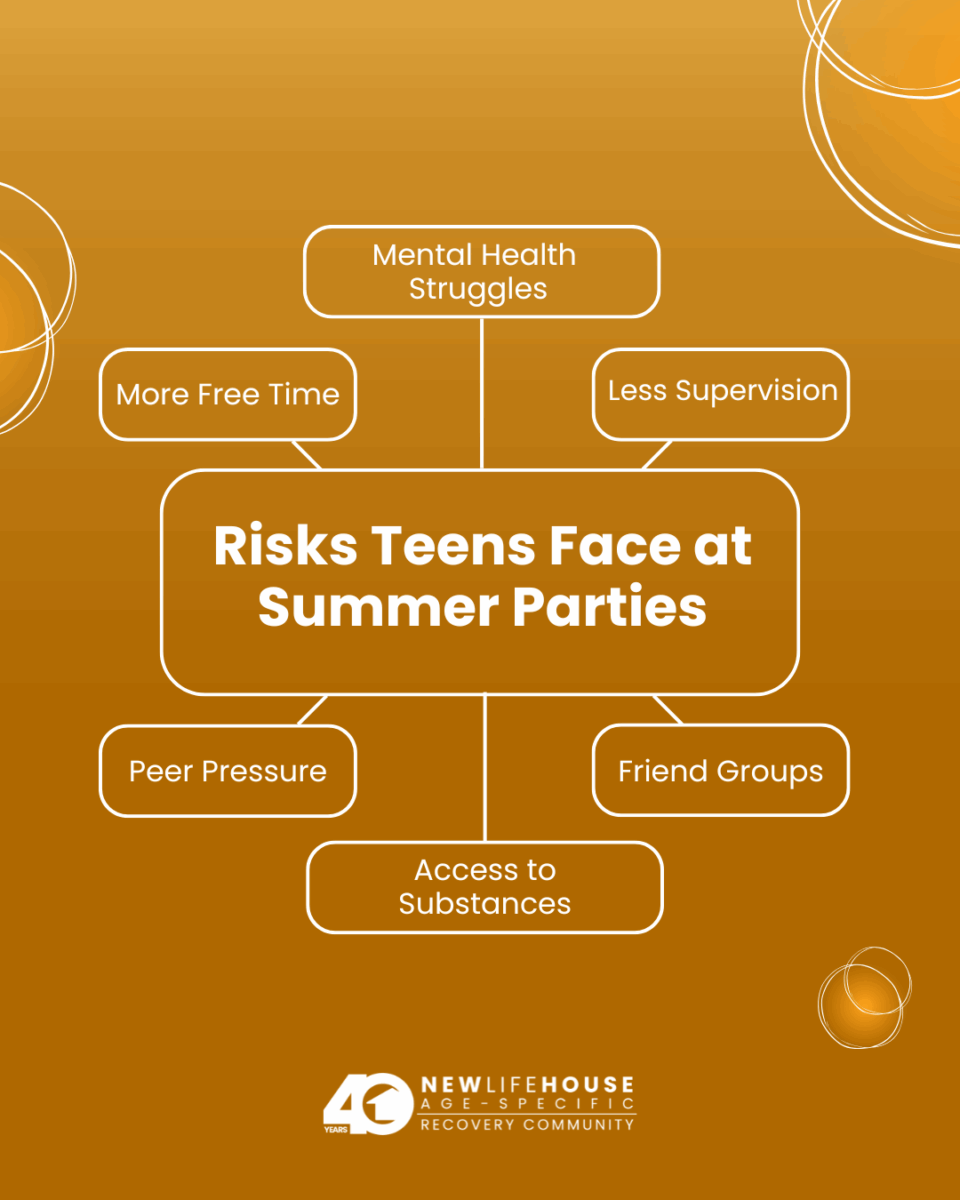
Summer parties present a perfect storm of risk factors that can put teens in vulnerable situations. The combination of increased free time, reduced adult supervision, and heightened peer pressure creates an environment where experimentation with substances becomes more likely.
As teens navigate new friend groups and social dynamics during these gatherings, they may feel compelled to engage in risky behaviors to fit in or gain acceptance. Additionally, the stress of these social pressures, combined with easier access to alcohol and drugs at parties, can take a significant toll on teens’ mental health, potentially leading to anxiety, depression, or other emotional struggles that extend well beyond the party itself.
When should parents intervene if their teen is partying?
As a parent, it might be confusing to know when to step in and see if your teen needs support. There might be feelings of uncertainty around upsetting your teen or concerns around having your child become more secretive.
Some signs that it may be time to seek help for your teen are when:
- Partying interferes with daily life or responsibilities
- You suspect or confirm substance use
- There’s been a dangerous incident, such as a car accident or alcohol poisoning
- Your teen becomes hostile, detached, or deeply secretive
- Your teen’s mental health is declining, which can lead to the development of depression, anxiety, or extreme mood changes
When you decide to talk about your concerns with your teen, having an honest, non-judgmental conversation will create a space for fluid conversation. As a parent, be sure to set clear boundaries and expectations moving forward that you clarify in the conversation. Urging your teen to consult with a therapist is another positive step forward, and even considering sober living.
Worried about your teen’s partying? You’re not alone.
Summer can be a time of connection and fun, but when partying leads to substance use or risky behavior, it may be time for extra support. At New Life House, we provide a structured, peer-based sober living program that helps young men build healthy habits and lasting change. We’re here to help your family take the next step toward recovery.
New Life House Can Support Your Teen
Early intervention with substance abuse is always key to preventing any life-threatening situations. It genuinely saves lives, so if your teen is struggling with substance abuse or unhealthy behaviors, there are options for support. New Life House is a recovery-focused option that allows your teen to recover from substance abuse while also learning real-life coping mechanisms and independent skills.
At New Life House, we provide peer-driven sober living for young men in the Los Angeles area. We know the challenges families face during the summer, and we’re here to help your loved one build a life of accountability, purpose, and long-term recovery. If you’re concerned about your son’s excessive partying and changed behavior, don’t wait. Reach out to New Life House today to discover how our sober living in Los Angeles can help.
References:
- Get the Facts About Underage Drinking | National Institute on Alcohol Abuse and Alcoholism (NIAAA). (n.d.). https://www.niaaa.nih.gov/publications/brochures-and-fact-sheets/underage-drinking
- What parents should know about teen drug abuse. (n.d.). Mayo Clinic. https://www.mayoclinic.org/healthy-lifestyle/tween-and-teen-health/in-depth/teen-drug-abuse/art-20045921