
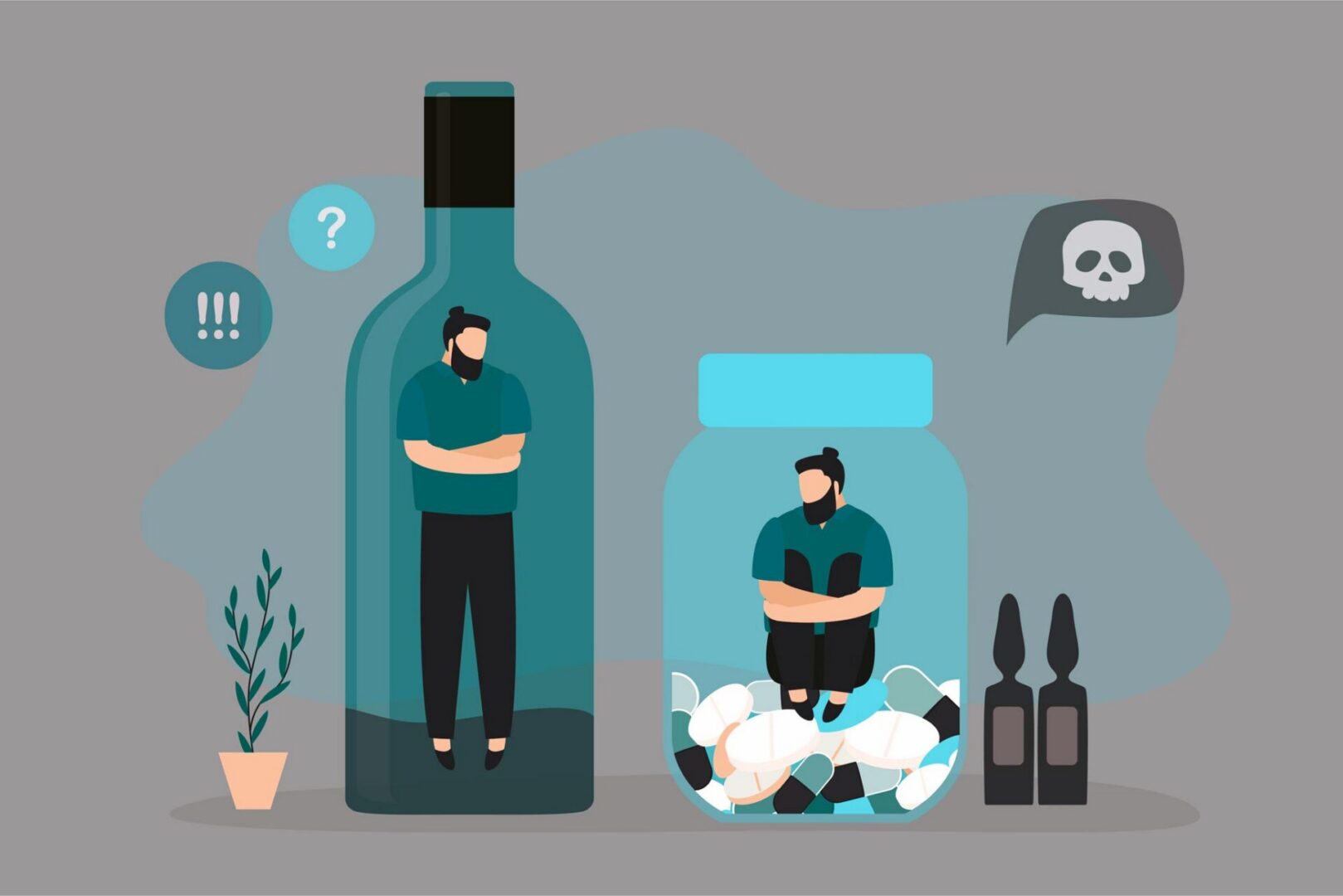
Polysubstance abuse refers to using more than one substance, whether drugs, alcohol, prescription medications, or other psychoactive substances, either at the same time or within a short period. You might hear it called polysubstance use or polydrug use. At its core, it simply means that more than one drug is involved.
The Centers for Disease Control and Prevention (CDC) defines polysubstance use as the use of two or more drugs at the same time or within a short timeframe, which can increase health risks because substances interact inside the body in unpredictable ways [1].
For many, polysubstance abuse doesn’t begin with a plan to use multiple substances; it often evolves gradually. What may start as alcohol use, opioid use, or prescription drug misuse can slowly expand as different substances are introduced to enhance certain effects, reduce side effects, or cope with mental health symptoms.
Over time, this pattern can develop into polysubstance dependence, where your body and brain adapt to multiple substances, not just one.

What is the criteria for polysubstance abuse?
There is no standalone diagnosis labeled “polysubstance abuse” in the current Diagnostic and Statistical Manual of Mental Disorders (DSM-5-TR), the authoritative guide for diagnosing mental health disorders. Instead, clinicians diagnose substance use disorder (SUD) based on patterns of impairment related to each substance [2].
However, when someone meets criteria for more than one substance use disorder at the same time (such as alcohol use disorder and opioid use disorder), clinicians recognize this as polysubstance use disorder.
A substance use disorder may involve:
- Loss of control over use
- Cravings
- Continued use despite harm
- Withdrawal symptoms
- Tolerance
- Impact on relationships, work, or school
When more than one substance is involved, symptoms can be more severe, and as a result, treatment becomes more complex.
How common is polysubstance use?
Polysubstance use is more common than many people realize.
According to the National Survey on Drug Use and Health (NSDUH), millions of Americans meet criteria for substance use disorder involving alcohol, illicit substances, or prescription drugs (and many experience overlapping use patterns) [3].
Additionally:
- A large proportion of overdose deaths involve more than one drug.
- The opioid crisis increasingly involves stimulant and sedative combinations.
- Individuals with mental health conditions are significantly more likely to engage in substance use [3].
From a public health perspective, polysubstance use patterns now play a major role in overdose statistics across the United States [1].
Related: Fentanyl Overdose: How to Recognize it, Respond, and Get Support
Common substance combinations and why they’re dangerous
Understanding specific substance combinations can help you recognize the risks of mixing drugs earlier on.
Opioids + benzodiazepines (one of the most dangerous combinations)
Combining opioids (like heroin, fentanyl, or oxycodone) with benzodiazepines (like Xanax, Ativan, or Valium) significantly increases the risk of respiratory depression and overdose.
Both substances suppress breathing and central nervous system activity. When taken together, their sedative effects compound. Combining opioids with benzodiazepines increases the risk of slowed breathing and overdose because both substances depress the central nervous system, a danger highlighted by federal health agencies [4].
Research confirms that combining opioids and benzodiazepines raises the likelihood of emergency department visits and fatal overdose [5].
This combination is especially common in individuals who are:
- Self-medicating anxiety
- Managing chronic pain
- Experiencing opioid withdrawal and attempting to induce sleep
Alcohol + cocaine
When you’re mixing alcohol and cocaine, your body produces a compound called cocaethylene [5]. This substance increases strain on the heart and liver and raises the risk of sudden cardiac complications.
Professionals in this space explain that combining substances can produce new and sometimes more toxic compounds in the body.
Opioids + stimulants (also known as “speedballing”)
Using opioids alongside stimulants like methamphetamine or cocaine is sometimes done intentionally to balance desired effects. The stimulant may reduce sedation, while the opioid softens anxiety or crash symptoms.
However, this form of simultaneous polysubstance use places enormous stress on:
- Heart rate
- Blood pressure
- Cognitive functioning
It also increases overdose risk because the stimulant can mask how sedated someone actually is.
Prescription drug misuse + alcohol
Prescription medications (especially sedatives, sleep aids, and certain antidepressants) can interact dangerously with alcohol.
Mixing alcohol with prescription drugs can:
- Intensify sedation
- Impair judgment
- Increase risk of blackouts
- Slow breathing
SAMHSA’s Drug Abuse Warning Network shows that a significant portion of emergency department visits related to drug use involve more than one substance. This highlights how combining alcohol with other substances contributes to serious health events that require medical care [6].
Related: Top 10 Most Commonly Abused Prescription Medications
Party drugs + alcohol (club drugs)
Among university students and young adults, intentional polysubstance use may include:
- Drinking alcohol
- Cocaine use
- MDMA (ecstasy)
- Benzodiazepines
These substance combinations are often driven by social environments and desired effects like energy, confidence, or prolonged partying. However, they can lead to dehydration, cardiac strain, overdose, and longer periods of mental instability afterward.
Related: Wild College Parties – How Wild Nights Out Can Turn To Binge Drinking Disorder
The mental health connection: how it often begins
One of the most important things to understand is that polysubstance abuse is rarely random., it is often fueled by untreated mental health conditions.
Anxiety → Benzos → Alcohol → Cocaine
You struggle with anxiety, so you’re prescribed benzodiazepines. They help at first, but eventually, tolerance builds.
You start drinking alcohol socially. The combination of benzos and alcohol reduces social anxiety. At parties, cocaine enters the picture. Now you’re combining substances to regulate emotions.
At the root of the issue was anxiety (possibly a pre-existing condition). Over time, self-medication turned into polysubstance dependence.
Research consistently shows that individuals with mental disorders are more likely to experience substance use disorders and vice versa [7].
Related: Uncovering the Link: How Do Drugs Affect Mental Health?
Opioid Use → Depressive Slump → Stimulants
Opioid use can create intense pleasure initially. But over time, repeated opioid exposure alters reward pathways in the brain. When not using, you may feel flat, unmotivated, or depressed.
To counteract that low, stimulants like methamphetamine or prescription stimulants are introduced. Now, different substances are being used to regulate mood swings caused by prior substance use. The cycle deepens both addiction and depression.
ADHD → Prescription Stimulants → Alcohol
Someone with ADHD may misuse prescription drugs like Adderall to improve focus. But stimulants increase anxiety and insomnia. To come down or induce sleep, alcohol or sedatives are used. This creates polysubstance use patterns driven by untreated or partially treated mental health conditions.
Related: Understanding the Link Between Mental Health and Addiction
Why polysubstance abuse is so dangerous
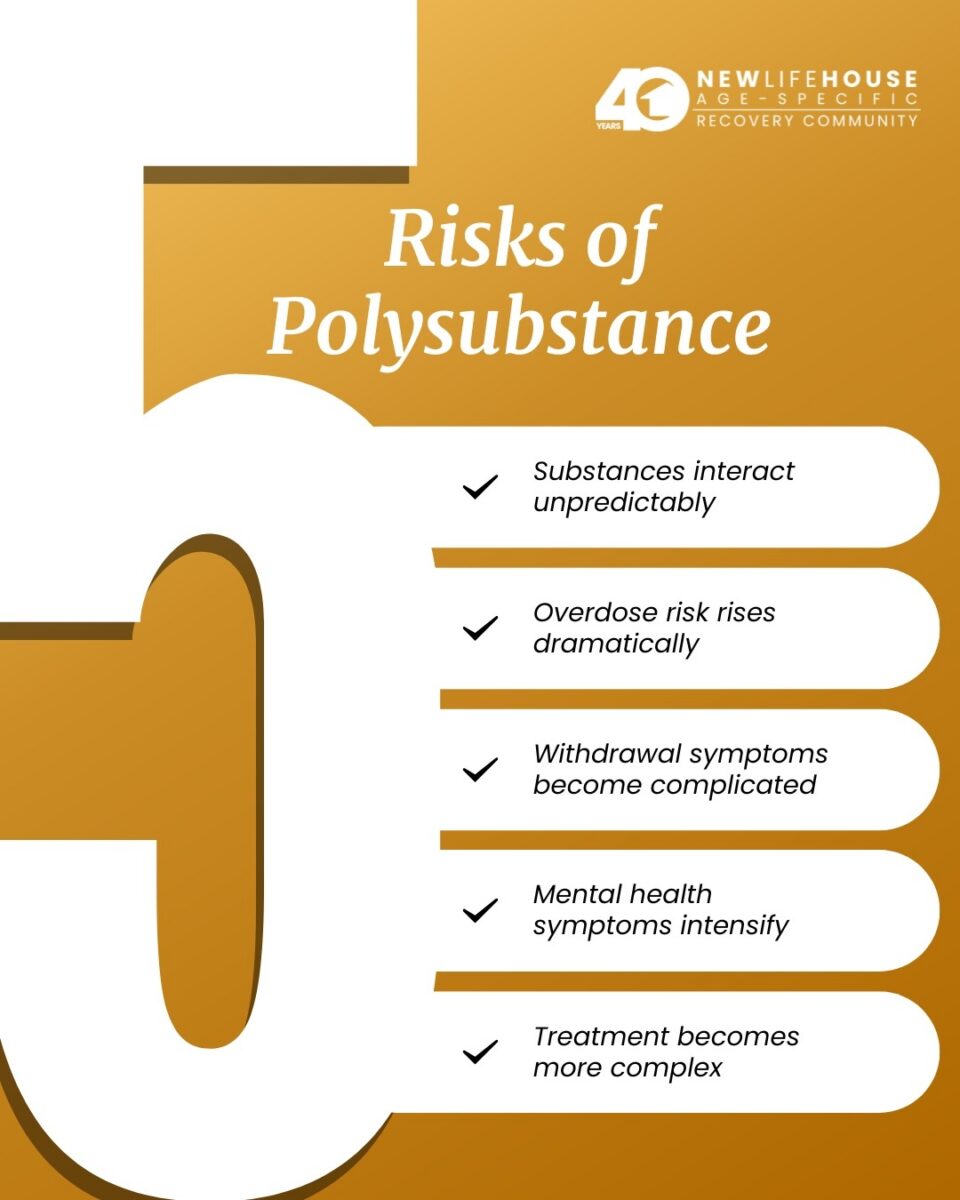
Polysubstance abuse increases risk because:
- Substances interact unpredictably
- Overdose risk rises dramatically
- Withdrawal symptoms become more complicated
- Mental health symptoms intensify
- Treatment becomes more complex
Why integrated treatment matters
Research suggests that individuals with co-occurring substance use and mental health conditions experience poorer treatment outcomes if only one issue is addressed [7].
That’s why effective treatment for polysubstance use disorder must:
- Address all substances involved
- Evaluate mental health conditions
- Treat anxiety, depression, trauma, or ADHD
- Provide structure and accountability
- Offer peer support
You cannot treat “one substance” and ignore the rest. You cannot treat substance abuse without addressing the emotional drivers beneath it.

How New Life House helps you build long-term sobriety
At New Life House in Los Angeles, recovery is about far more than stopping drug and alcohol use.
Our recovery model starts with a process that helps you understand the mental health roots and other causes of your addictive behaviors. We then tailor specific programming to address those areas in your life while you focus on rebuilding honesty and accountability.
Other key components of a successful recovery are healing family relationships, developing healthy coping skills, pursuing career as well as education goals, and building community with peers walking the same path.
Polysubstance abuse may have shaped part of your story, but it does not define your future. When you begin addressing the deeper emotional patterns, mental health challenges, and life stressors underneath substance use, real change becomes possible. With the right support, structure, and community around you, you can build a life that feels stable, meaningful, and fully your own, one rooted in purpose instead of survival.
References
- Polysubstance use facts. (2024, April 2). Stop Overdose. https://www.cdc.gov/stop-overdose/caring/polysubstance-use.html
- DSM. (n.d.). https://www.psychiatry.org/psychiatrists/practice/dsm
- 2023 NSDUH Annual National Report. (n.d.). CBHSQ Data. https://www.samhsa.gov/data/report/2023-nsduh-annual-national-report
- National Institute on Drug Abuse (NIDA). (2022, November 7). Benzodiazepines and opioids. National Institute on Drug Abuse. https://nida.nih.gov/research-topics/opioids/benzodiazepines-opioids
- Pergolizzi, J., Breve, F., Magnusson, P., LeQuang, J. a. K., & Varrassi, G. (2022). Cocaethylene: when cocaine and alcohol are taken together. Cureus, 14(2), e22498. https://doi.org/10.7759/cureus.22498
- 2024 Drug Abuse Warning Network (DAWN) National Annual Estimates. (n.d.). CBHSQ Data. https://www.samhsa.gov/data/data-we-collect/dawn-drug-abuse-warning-network/annual-releases/2024
- Finding help for Co-Occurring substance use and mental disorders. (n.d.). National Institute of Mental Health (NIMH). https://www.nimh.nih.gov/health/topics/substance-use-and-mental-health