

Is it normal to get drunk alone? For many people, having a beer or a glass of wine after work is how they unwind. It’s part of their routine. If you’ve ever caught yourself wondering whether your solo drinking habits are something to think twice about, you’re not alone. Many people ask themselves whether drinking alone is bad.
Drinking alone can be a tricky thing because it’s all too often seen through the lens of “unwinding” at first. After all, a person simply enjoying a drink to cope with a heavy, stressful week is pretty normal in our culture. But at some point, a quiet voice might whisper: “Is this fine, or is this something I should pay attention to?”
The Shift Can Happen Gradually
Sometimes, what can happen is that one drink becomes two drinks, two drinks become three drinks, and three drinks become a habit that spills outside of the weekends to start creating some very serious real-world consequences. There’s increasing isolation, missed days of work, outbursts with family or friends, and risky behaviors.
Drinking alone isn’t automatically alcohol abuse or a substance use disorder. However, it can be a clear warning sign. A common characteristic that can signal a problem is escalation. [1] Has the volume of alcohol stayed the same or increased over time?
There’s obviously a lot to dig into here, whether you’re someone who drinks alone or a family member with concerns. In this article, we’ll take a closer look at when you should be worried about drinking alone. We’ll also dive into the steps to take if you are concerned.

Is Drinking Alone Bad?
What does it mean when someone drinks alone? Drinking alone removes the bonding aspect of drinking. Most of us are familiar with unwinding with a glass of wine on the porch with a sweetheart or going to happy hour with friends. A solo drinker seeks the experience without the connection.
Common Examples of Drinking Alone
- Drinking while watching TV
- Leaving events early to go drink
- Regularly drinking to fall asleep
- Getting home from work and immediately grabbing a drink
- Passing out while drinking each night instead of going to bed
Frequency matters here. Occasional solo drinking is different from routine solo drinking. It’s generally not worrisome when a person has a glass of wine or a can of beer at the end of the week while watching a movie alone or mowing the grass. Multiple drinks on multiple nights of the week can be a problem with solo drinking. Alarm bells should go off if drinking is secretive. A mix of regular drinking, solo drinking, and secretive drinking could indicate alcohol use disorder (AUD). [1]
Drinking alone removes social accountability. It’s different from sharing a drink with a friend. When you drink with a friend, they may notice when you have had one too many drinks and encourage you to slow down. When you drink alone, you don’t have those guardrails. This can make it much easier to drink more than you intended.
Related: What is a Weekend Alcoholic?
Why Do People Drink Alone?
There are many reasons why a person may drink alone. As discussed above, many people start off drinking alone as a way to unwind or relax. Some people drink alone as an emotional coping strategy. However, it often doesn’t help. The combination of isolation and alcohol can actually make anxiety and depression worse.[2]
Related: Why Do Young People Drink?
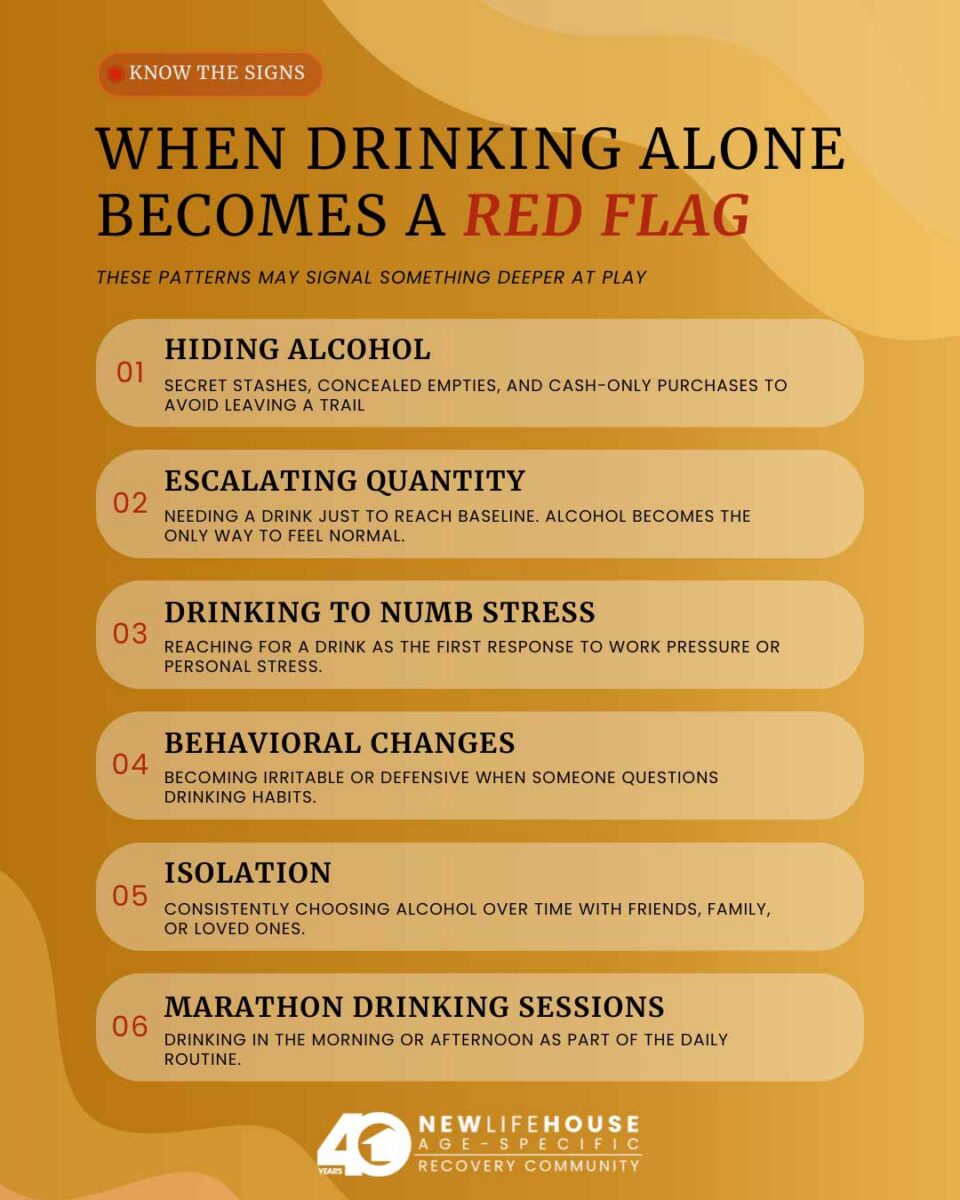
When Drinking Alone Becomes a Red Flag
Let’s talk about danger signs. Drinking alone may be getting out of hand if you see:
- Hiding Alcohol: Storing alcohol in secret places, hiding empty bottles and cans, paying for drinks with cash only.
- Escalating Quantity: Needing a drink just to get to baseline.
- Drinking to Numb Stress: Reaching for drinks in response to work or personal stress.
- Behavior Changes: Irritability or defensiveness when questioned.
- Isolation: Choosing to drink alcohol over spending time with people.
- Marathon Drinking Sessions: Drinking in the morning or afternoon.
These are signs of an alcohol use disorder. [1]
Why Isolation and Addiction Reinforce Each Other
Research has shown that social isolation is related to increased alcohol consumption.[3] If drinking happens when a person is alone, it often has a different purpose than when someone is drinking in a social setting. Often, people drink alone to cope with boredom, manage stress, or numb emotions. [4]
Over time, that pattern can make it even harder to address the underlying cause and reinforce continued alcohol use. Alcohol becomes a crutch.
The Shift: From Isolation to Accountability
Drinking by yourself creates secrecy, stagnation, and the feeling of digging a hole that’s too deep. This is why sober living can be such a life-changing experience. This setup tackles the root causes of solo drinking by addressing isolation and self-loathing from the get-go.
A sober living environment has structure and accountability built in. The idea of muscling through alone doesn’t exist here. A lifestyle of shared meals, shared routines, and house standards puts guardrails into each day. Mentorship also plays a big role in why this model works. Residents get guidance and positive modeling.
Finally, daily accountability is extremely important when it comes to recovery. Having a supportive person check in on you on a regular basis can make a big difference, especially if you don’t have supportive family or friends.
For Parents With Questions About Sober Living
Is your son getting drunk alone regularly? You may be unsure of the line between normal and problematic. Many parents struggle with a fear of overreacting. You don’t want to make accusations. You’re afraid that could cause them to start hiding their drinking. You’re also fearful you’ll push them away if you ask too many questions. It can be especially hard when an adult child appears to be drinking too much or drinking alone.
It’s not always easy to know when it’s a problem. Most parents accept that it’s common for college-aged kids or young adults to drink. However, the norm is drinking socially with friends on the weekends. Drinking alone looks different. It replaces the social aspect of drinking with drowning one’s problems. However, society does celebrate the idea of the cocktail at the end of the night to take the edge off. This is why many parents take so long to raise their concerns.
Some telltale signs can let you know if drinking is normal or worrying. Personality changes, spending more time alone, lying about drinking, or appearing drunk at odd times are signals.
Related: My Son is Killing Himself With Alcohol
What To Do If Drinking Is Becoming a Problem
This doesn’t have to turn into an accusation. The first step is observing. Look for patterns that indicate problematic drinking behaviors. This can include things like:
- Drinking first thing in the morning
- Staying up too late drinking
- Smelling like alcohol constantly
- Physical evidence of empty bottles and cans in the trash
- Missing work or school because of drinking
- Frequent binge drinking and blackouts
What’s the best way to talk about problematic drinking?
Don’t be afraid to start the conversation. There’s a good chance that solo drinking is already the elephant in the room. Address it in a direct and nonconfrontational manner. Let them know that you’re worried about what you’re seeing.
Make sure to have a plan. Telling them to stop drinking isn’t enough. The odds of them listening are not in your favor. It’s better to come in with some suggestions and guidance up your sleeve.
What should the conversation look like?
Recommend an alcohol addiction assessment. They’ll speak with an alcohol counselor trained to determine if drinking is problematic. This takes the burden off you to be the one to tell them they have a problem. Only a professional can formally diagnose a person with AUD. However, you may already have a good idea that this is the case based on behaviors and consequences that are already observed.
From there, it may be time to consider structured sober living. Structured sober living creates a supportive environment. It also provides the accountability people need during those tender and early days of sobriety.
Finding Identity and Growth After Solo Drinking Escalates
Solo drinking often points to a much larger problem. Things like loneliness, lack of self-identity, anxiety, and fear of the future are often in the mix. Many young men struggle with drinking alone because alcohol can feel like an easy way to cope without opening up to others.
Sobriety isn’t pulling away your security blanket. It is learning to become dependable and growing into adulthood with healthy coping tools.
Ultimately, sobriety after drinking alone comes down to connection over superficial coping. Could it be time to consider if alcohol addiction treatment and sober living is the right path? After your assessment, you can create a plan for safety and accountability using sober living that focuses on connection over accusations. Reach out today to learn more!
Sources
- American Psychiatric Association. (2022). Diagnostic and statistical manual of mental disorders. Diagnostic and Statistical Manual of Mental Disorders, Fifth Edition, Text Revision (DSM-5-TR), 5(5). https://doi.org/10.1176/appi.books.9780890425787
- Schuckit M. A. (1996). Alcohol, Anxiety, and Depressive Disorders. Alcohol health and research world, 20(2), 81–85. https://pmc.ncbi.nlm.nih.gov/articles/PMC6876499/
- Bowen, M. T., George, O., Muskiewicz, D. E., & Hall, F. S. (2022). Factors contributing to the escalation of alcohol consumption. Neuroscience & Biobehavioral Reviews, 132, 730–756. https://pmc.ncbi.nlm.nih.gov/articles/PMC8892842/pdf/nihms-1779937.pdf
- Creswell K. G. (2021). Drinking Together and Drinking Alone: A Social-Contextual Framework for Examining Risk for Alcohol Use Disorder. Current directions in psychological science, 30(1), 19–25. https://doi.org/10.1177/0963721420969406