
Adderall is one of the most commonly prescribed stimulant medications for attention-deficit/hyperactivity disorder (ADHD). For many people, it improves focus, organization, and daily functioning. But when Adderall and alcohol enter the picture together, the situation can become far more complicated.
Whether it happens intentionally or accidentally, mixing Adderall and alcohol is a form of polysubstance use that carries real risks. Some people take Adderall to study and later drink at parties. Others drink alcohol and then take Adderall to stay awake longer. In nightlife or college environments, some people even misuse prescription stimulants to enhance social energy while drinking.
Over time, this combination can contribute to drug abuse, alcohol misuse, and addiction. Understanding why people mix these two substances and what can happen when they do can help you recognize warning signs and take steps toward recovery.

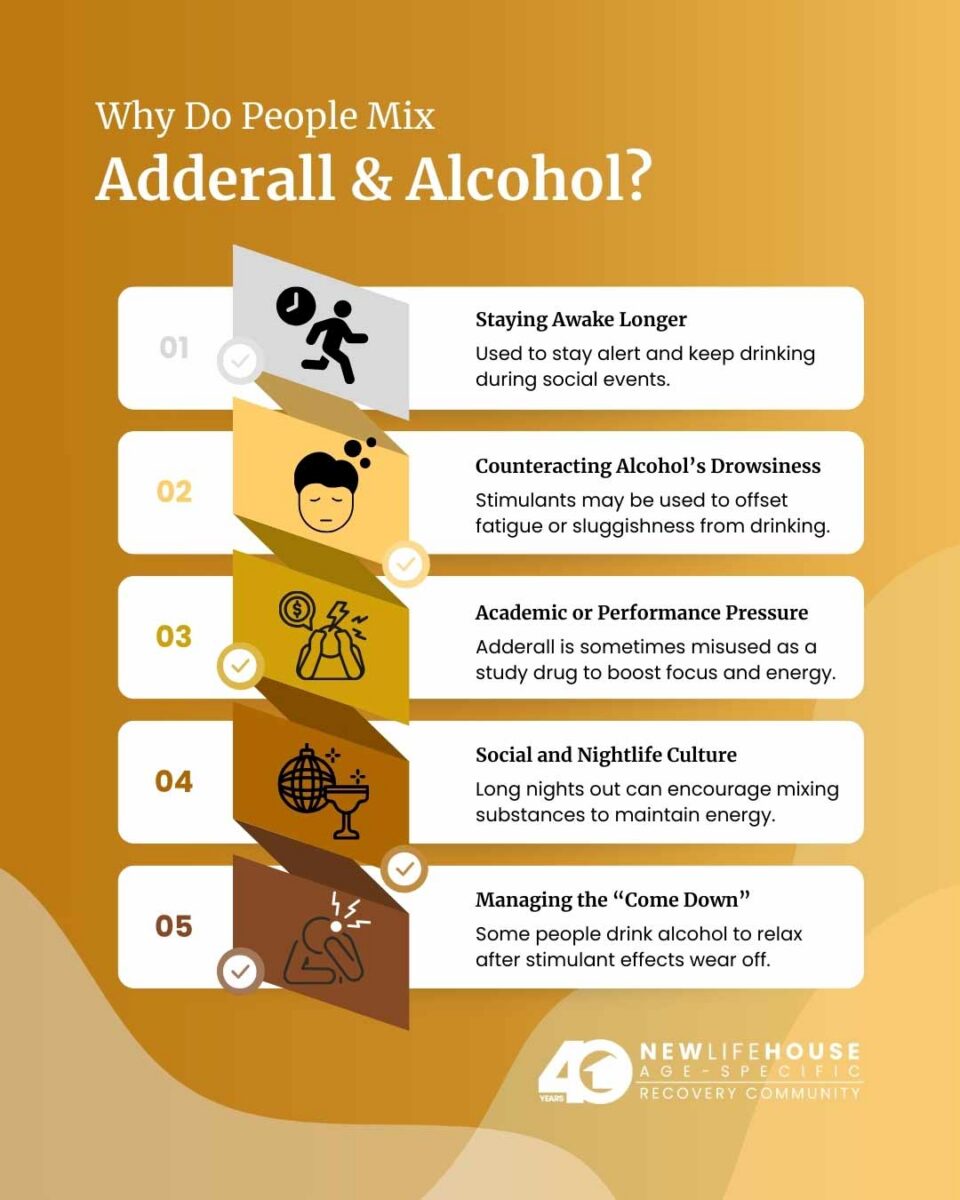
Why Do People Mix Adderall and Alcohol?
There are many reasons why people mix Adderall and alcohol. Sometimes it starts with curiosity or convenience. Other times, it develops out of pressure, mental health struggles, or substance use patterns.
Adderall is a prescription stimulant medication that increases dopamine and norepinephrine activity in the brain. This can improve focus and mental performance, which is why it’s prescribed as an ADHD medication. However, it is also commonly misused as a study drug, particularly among college students and young adults trying to boost academic performance or stay awake longer while studying [1].
Alcohol has the opposite effect on the nervous system. It is a depressant that slows brain activity and impairs coordination, judgment, and reaction time.
Because these two substances affect the brain in different ways, some people believe they balance each other out. In reality, they do not.
Common reasons people mix Adderall and alcohol include:
- Using Adderall to stay awake while drinking alcohol
- Taking stimulants to counteract alcohol’s sedating effects
- Academic pressure and misuse of stimulants as a study drug
- Social or nightlife culture that encourages long nights out
- Drinking alcohol after taking Adderall earlier in the day
- Using alcohol to “come down” after stimulant effects wear off
- Drinking and then taking Adderall to regain energy
Research has found that non-medical use of prescription stimulants is often linked with heavier alcohol use, especially among college populations [2].
Over time, this pattern can evolve into polysubstance use, where multiple substances are used together or in close succession.
Related: Why Is Prescription Drug Abuse So Common On College Campuses?
How Does Alcohol Affect Stimulants?
Alcohol and stimulants interact in ways that can make substance use more dangerous.
One of the biggest concerns with mixing Adderall and alcohol is that stimulants can mask the sedating effects of alcohol. This means you may not feel as intoxicated as you actually are.
Adderall increases alertness and energy, causing it to create the illusion that you are functioning normally while drinking alcohol. Yet, the body is still experiencing alcohol intoxication.
This can lead to:
- Drinking far more alcohol than intended
- Dangerous binge-drinking patterns
- Alcohol poisoning or alcohol overdose
- Poor decision-making and risk-taking behavior
- Increased likelihood of motor vehicle accidents
Alcohol combined with other drugs is associated with higher rates of injury, overdose, and other serious health consequences [3].
When both alcohol and stimulant medications are present in the body, the nervous system can become strained. Research shows that combining alcohol with psychostimulants can increase heart rate, blood pressure, and cardiovascular stress [4].
Can You Drink Alcohol While on ADHD Medication?
Many people prescribed ADHD medication wonder whether drinking alcohol while taking Adderall is safe.
If you are taking Adderall as prescribed, it’s important to talk with your healthcare provider about alcohol use. Even when taken appropriately, combining stimulant medications with alcohol can still increase certain risks.
Potential health consequences may include:
- Increased heart rate and increased blood pressure
- Sleep disruption and burnout
- Heightened anxiety or panic
- Impaired judgment and coordination
- Increased risk of alcohol misuse
Alcohol can also interfere with the effectiveness of medications or make side effects worse [5].
This is why many healthcare providers recommend avoiding mixing alcohol with prescription drugs, especially stimulant medications.
How Mixing Adderall and Alcohol Can Happen
The reality is that people mix Adderall and alcohol in many different ways. Sometimes it happens accidentally. Other times, it develops as part of a broader pattern of substance use.
Here are a few common scenarios.
Taking Adderall for ADHD and Drinking Alcohol Later
Someone may take Adderall in the morning to manage ADHD symptoms and then drink alcohol at night without realizing the substances are still interacting in the body.
Using Adderall to Study and Drinking at Parties
Adderall misuse as a study drug is common among college students and young adults. Someone may take it to improve academic performance during the week and later drink alcohol during social events.
Using Stimulants While Partying
Some people intentionally combine Adderall and alcohol to stay energized while drinking. They may snort or misuse Adderall for its stimulant effects while drinking alcohol during parties or nightlife.
Drinking Alcohol and Then Taking Adderall
Others start by drinking alcohol and later take Adderall to stay awake longer or continue socializing.
Taking Adderall and Drinking to Come Down
When stimulant effects wear off, some people drink alcohol to relax or manage the crash. This pattern can create a cycle of stimulant use followed by alcohol use.
Over time, these behaviors can increase the risk of substance use disorder, alcohol addiction, or Adderall addiction.
Related: Why is Adderall Addictive?
ADHD, Mental Health, and Substance Use
There is also an important mental health connection when discussing Adderall and alcohol.
People with ADHD may face unique challenges that increase vulnerability to substance use.
These challenges can include:
- Impulsivity and reward-seeking behavior
- Emotional regulation difficulties
- Stress or overstimulation
- Racing thoughts
- Difficulty slowing down
For some people, alcohol becomes a form of self-medication. Drinking alcohol may temporarily quiet racing thoughts or reduce social anxiety. But when alcohol is combined with prescription stimulants, the emotional and physical effects can become unpredictable.
ADHD is also associated with higher rates of substance use disorders compared with the general population [6].
This doesn’t mean ADHD medication causes addiction. In fact, some research suggests properly managed ADHD treatment may reduce the risk of substance abuse over time [7].
However, misuse of Adderall, diversion of prescription drugs, and mixing substances can increase the risk of addiction.
Related: Dual Diagnosis and Co-Occurring Disorders: Treating Mental Health and Addiction Together
Signs That Mixing Adderall and Alcohol Is Becoming a Problem
Polysubstance use can sometimes develop gradually. Recognizing early warning signs can help you intervene before addiction progresses.
Possible warning signs include:
- Needing stimulants to stay awake while drinking alcohol
- Increasing alcohol tolerance
- Drinking longer or heavier when taking Adderall
- Mood crashes after stimulant and alcohol use
- Anxiety, irritability, or panic after nights of drinking
- Sleep disruption and exhaustion
- Continuing to use substances despite negative consequences
When mixing Adderall and alcohol becomes a regular pattern, the risk of alcohol use disorder, stimulant misuse, and addiction increases.
What Interacts Badly With Adderall?
Adderall can interact with several other substances and medications. Combining them can increase health risks.
Substances that may interact poorly with Adderall include:
- Alcohol
- Other stimulant drugs
- Certain antidepressants
- Some blood pressure medications
- Illicit substances like cocaine or methamphetamine
Combining Adderall with other substances, especially alcohol, can place significant stress on the heart, brain, and liver. In some cases, the interaction can become life threatening.
If you or someone around you experiences severe symptoms after mixing Adderall and alcohol, such as chest pain, confusion, seizures, or trouble breathing, seek emergency medical help immediately.

How New Life House Can Help You Break the Cycle
If Adderall and alcohol addiction have started to take hold, you don’t have to face it alone.
At New Life House, recovery goes beyond just stopping substances. We can help you understand why the pattern began and build a life that supports long-term sobriety.
Our structured sober living program in Los Angeles helps young men rebuild stability, purpose, and community after addiction.
Through individualized programming, we help you address the deeper factors behind substance use, including mental health challenges, stress, and emotional regulation.
New Life House works closely with trusted clinical partners to support every stage of recovery:
- Clear Behavioral Health provides medical detox and addiction treatment programs, including inpatient rehab and outpatient levels of care such as PHP and IOP.
- Neuro Wellness Spa offers psychiatry services and medication management, which can help individuals with ADHD receive appropriate treatment while supporting sobriety.
Our program also includes:
- Family therapy and family programming
- Parent support groups
- Educational programming
- Peer accountability and community support
- Life-skills development for long-term recovery
Choosing recovery can be the first step toward building a meaningful, healthy life that no longer revolves around substances. With the right support system, lasting sobriety is possible.
References
- Dextroamphetamine and amphetamine: MedlinePlus drug information. (n.d.). https://medlineplus.gov/druginfo/meds/a601234.html
- Egan, K. L., Reboussin, B. A., Blocker, J. N., Wolfson, M., & Sutfin, E. L. (2012). Simultaneous use of non-medical ADHD prescription stimulants and alcohol among undergraduate students. Drug and Alcohol Dependence, 131(1–2), 71–77. https://doi.org/10.1016/j.drugalcdep.2012.12.004
- Drinking alcohol while using other drugs can be deadly. (2025, January 31). Alcohol Use. https://www.cdc.gov/alcohol/about-alcohol-use/other-drug-use.html
- Althobaiti, Y. S., & Sari, Y. (2016). Alcohol Interactions with Psychostimulants: An Overview of Animal and Human Studies. Journal of Addiction Research & Therapy, 7(3). https://doi.org/10.4172/2155-6105.1000281
- Harmful interactions | National Institute on Alcohol Abuse and Alcoholism (NIAAA). (n.d.). https://www.niaaa.nih.gov/publications/brochures-and-fact-sheets/harmful-interactions-mixing-alcohol-with-medicines
- Kvirikashvili, R. (2023). The impact of alcohol and ADHD medication use on academic outcomes. ERIC Education Resources Information Center. https://files.eric.ed.gov/fulltext/EJ1407546.pdf
- Chang, Z., Lichtenstein, P., Halldner, L., D’Onofrio, B., Serlachius, E., Fazel, S., Långström, N., & Larsson, H. (2013). Stimulant ADHD medication and risk for substance abuse. Journal of Child Psychology and Psychiatry, 55(8), 878–885. https://doi.org/10.1111/jcpp.12164