

When someone first enters recovery, the focus is often simple and necessary: stop using drugs or alcohol. That early stage of sobriety is about survival. It’s about creating enough distance from addictive substances to stabilize your body, your mind, and your daily life.
But over time, many people discover an important truth: being physically sober isn’t the same as being emotionally sober.
What is emotional sobriety?
Emotional sobriety means having the ability to experience your emotions, including happy, sad, angry, calm, or somewhere in between, without being controlled by them. It’s the capacity to stay present with normal shifting emotions without turning to drugs, alcohol, or unhealthy behavior to cope.
Physical sobriety focuses on abstinence. Emotional sobriety focuses on how you respond to life.
This concept has long been recognized in recovery communities. In Alcoholics Anonymous, emotional sobriety is described as freedom from emotional extremes that once fueled substance use and relapse [1]. It’s not about avoiding feelings. It’s about learning to live with them in a healthy way.
Without emotional sobriety, someone may become what’s often called a “dry drunk”, physically sober but emotionally reactive, disconnected, or stuck in old patterns that increase relapse risk.
Developing emotional sobriety allows you to:
- Manage emotions without shutting down or exploding
- Sit with negative feelings without acting on them
- Respond instead of react during emotional ups and stress
- Build emotionally healthy relationships
- Continue personal growth long after early recovery
Emotional sobriety turns sobriety from something fragile into something sustainable.
Related: What is a Sober House and How Can it Transform Your Life?
What does it mean to have emotional intelligence?
Emotional sobriety and emotional intelligence are closely connected. Emotional intelligence is your ability to recognize your emotional state, understand what you’re feeling, and choose how to respond rather than acting on impulse.
In addiction recovery, emotional intelligence supports emotional regulation, the skill of managing emotions instead of being overwhelmed by them. This matters because unaddressed emotions can quietly undermine recovery efforts, even when someone is doing “everything right” on the surface.
When you develop emotional intelligence, you gain the ability to:
- Identify negative emotions before they spiral
- Challenge negative thoughts that fuel anxiety or depression
- Cope with stress, anger, or sadness without substances
- Stay present during conflict instead of shutting down
- Communicate feelings in a calm, healthy way
This process in sobriety is about awareness, practice, and humility, which enable you to recognize that emotions are a natural part of life and recovery is a lifelong project.
Related: More Than Just Sobriety: How a Recovery House Supports Mental Health and Personal Growth
Support is available when you’re ready
If you or someone you love is struggling to move beyond just “not using,” help is available. Recovery support is available to help you manage emotions, build emotional resilience, and move forward at every stage of the journey.
Emotional sobriety is earned, not given
One of the most important truths about emotional sobriety is that you don’t come into recovery with it.
At first, sobriety is about separation and getting enough distance from drugs, alcohol, and certain people or environments that once fueled substance use. Once that separation exists, the real recovery journey begins.
Emotional sobriety is built through:
- Hard work and consistency
- Developing integrity and accountability
- Building a strong sense of morals and values
- Learning to be of service to others
- Practicing humility in recovery
Over time, the focus shifts from “not getting high” to becoming an emotionally healthy person. You begin working on your character, your behavior, and your relationships with family and friends. You learn how to deal with disappointment, success, grief, and joy without escaping.
This process allows you to experience emotions in a healthy, grounded way, even when life feels overwhelming.
Why emotional sobriety matters in addiction recovery
Addiction isn’t just about substances. It’s about how you cope with life.
Substance use disorders often develop as a way to manage emotional pain, anxiety, depression, or emotional distress [2]. Without emotional sobriety, those same feelings can resurface and increase relapse risk even years into recovery.
You can be physically sober and still feel overwhelmed by anger, anxiety, sadness, or emotional distress. You can follow the rules, attend meetings, and avoid substances, yet feel stuck in negative thoughts, strained relationships, or a constant sense of inner unrest. This is where emotional sobriety comes in and why it matters so deeply for long-term recovery.
Emotional sobriety is about learning how to live life on life’s terms without escaping, numbing, or reacting in ways that undermine recovery efforts. It’s not something you arrive with. It’s something you develop, practice, and earn over time.
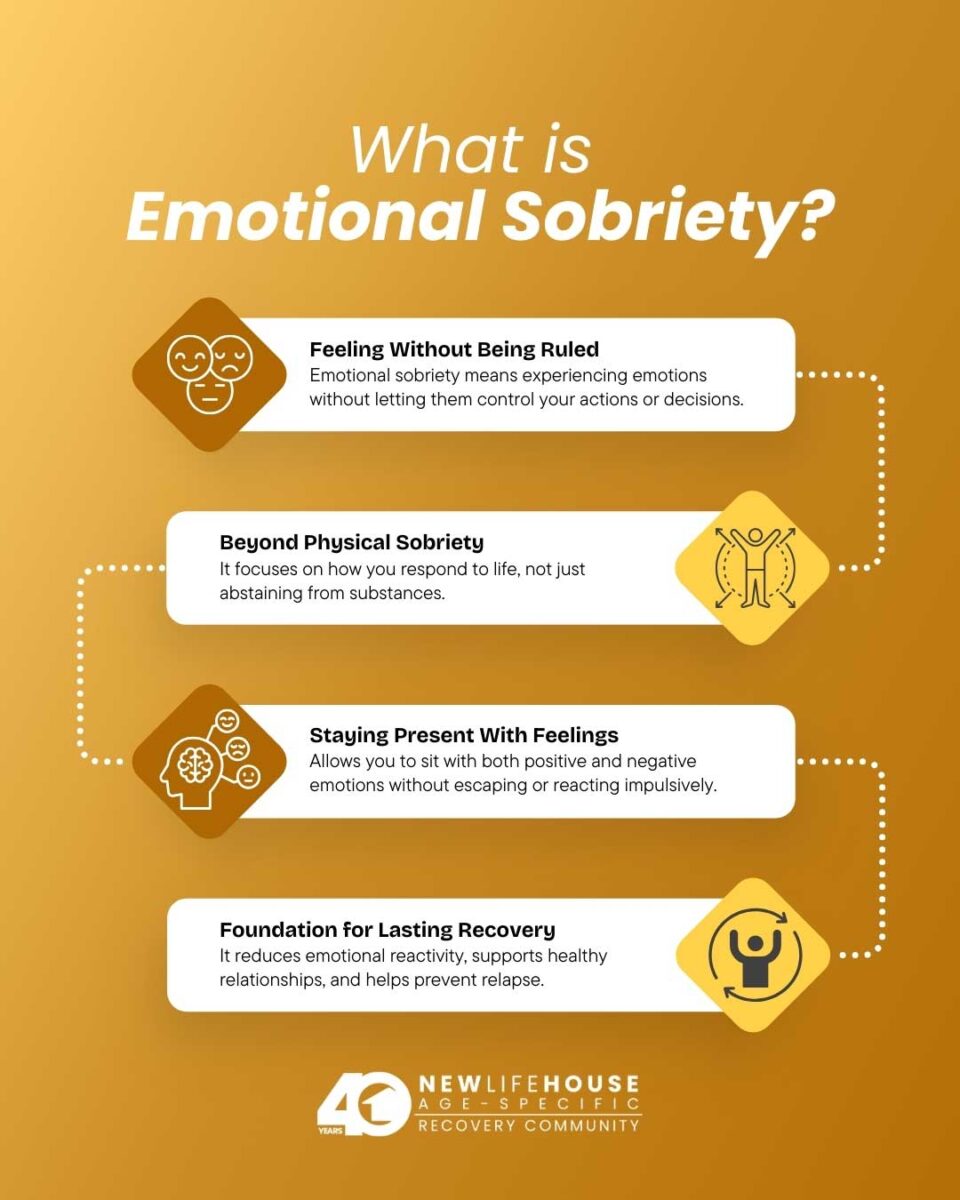
Maintaining emotional sobriety helps with:
- Preventing relapse during stressful life events
- Navigating relationships without old patterns
- Managing anxiety, anger, and negative feelings
- Supporting mental health alongside physical sobriety
- Creating stability during the recovery process
Long-term emotional sobriety strengthens recovery efforts by giving you the tools to cope with life as it unfolds without needing to escape it.
How emotional sobriety supports mental health
Emotional sobriety and mental health are deeply connected. Many people in recovery experience anxiety, depression, or dual diagnosis conditions that require ongoing support [3].
Learning to manage emotions helps you recognize when you need additional support, whether that’s peer support, a therapist, or structured programming. Emotional sobriety doesn’t replace professional care, but it strengthens your ability to engage with it in a meaningful way.
When you’re emotionally sober, you’re better equipped to:
- Recognize emotional distress early
- Communicate honestly about how you’re feeling
- Stay engaged in treatment and recovery supports
- Build resilience during setbacks
Related: Understanding the Link Between Mental Health and Addiction
You don’t have to do this alone
Recovery isn’t meant to be navigated solo. If you’re struggling emotionally, even while sober, supportive programs, therapy, and peer communities can help you achieve your recovery goals and build lasting emotional health.
How New Life House supports sobriety
At New Life House, emotional sobriety is a core part of the recovery process.
Our sober living in Los Angeles provides enough separation from your old life for long enough that real change can take root. During that time, you’re supported through personalized programming that helps you develop emotional sobriety in practical, lived ways.
Our program supports emotional sobriety through:
- Individualized recovery planning
- Family programming, therapy, and parent support groups
- Educational programming focused on achieving goals and independence
- Strong community and peer support
- Accountability, structure, and service opportunities
This environment allows you to experience life without substances while learning how to cope, communicate, and grow. When challenges come up, you’re supported as you learn to feel, reflect, and move forward in a healthy way.
By the time you decide to reassociate with the outside world, you’re not just sober. You’re a new person with new tools, stronger relationships, and a deeper sense of purpose.
Related: Recovery Home Vs Sober Living
Emotional sobriety is a lifelong journey
Emotional sobriety isn’t something you achieve once and check off a list. It’s a practice. A journey. A lifelong commitment to growth.
There will be moments when you feel calm and confident, and others when you feel angry, sad, or unsure. Emotional sobriety allows you to stay present through all of it without running, numbing, or giving up.
Recovery becomes less about avoiding substances and more about building a meaningful, emotionally healthy life. One rooted in connection, accountability, and the ability to cope with whatever comes next.
And that’s where real freedom begins.
References
- Wilson, B. (1958). Emotional sobriety. Alcoholics Anonymous World Services. https://aainthedesert.org/wp-content/uploads/2019/01/EMOTIONAL-SOBRIETY.pdf
- National Institute on Drug Abuse (NIDA). (2020, July 6). Preface. National Institute on Drug Abuse. https://nida.nih.gov/research-topics/addiction-science/drugs-brain-behavior-science-of-addiction
- Co-Occurring disorders and other health conditions. (n.d.). SAMHSA. https://www.samhsa.gov/substance-use/treatment/co-occurring-disorders
- Menefee, D. S., Ledoux, T., & Johnston, C. A. (2022). The importance of emotional regulation in mental health. American Journal of Lifestyle Medicine, 16(1), 28–31. https://doi.org/10.1177/15598276211049771