
Have you ever gone to a party, drank more than you intended, and had trouble remembering what you said or did the next day? These scenarios are common, but are they normal? The fact is, alcohol-induced blackouts can occur in anyone who drinks, regardless of their age or experience with drinking. Here, we’ll take a closer look at this common, yet concerning, event and how to know if your drinking is becoming a problem.
What Is Blacking Out?
Blacking out happens when alcohol drastically affects your brain’s hippocampus. The hippocampus is the part of your brain that is responsible for creating memories.1 When you black out, you lose the ability to remember things that happened when you were intoxicated.
Alcohol blackouts create a permanent void in your memory. However, they don’t cause you to pass out. To others, you may seem fully conscious and functional. For this reason, blackouts are dangerous and can have drastic consequences.

What Causes Alcohol Blackouts?
Alcohol impacts the brain in several ways. First, your hippocampus stops working properly. This means that information that is supposed to be stored for memory formation is “erased.” Alcohol causes an imbalance in your neurotransmitters, which also affects memory storage.
Some people experience fragmentary blackouts, also referred to as brownouts.2 A brownout results in spotty memories that you can partially retrieve with certain cues.
Drinking too much alcohol too fast leads to a rapid rise in your blood alcohol concentration (BAC). Binge drinking (consuming 4 or more drinks for women or 5 or more for men under 2 hours) can quickly overwhelm your body’s ability to metabolize alcohol, increasing your risk of becoming blackout drunk.3
If you drink frequently, you may build up your tolerance to some effects of alcohol. However, your hippocampus does not develop this tolerance. This means you may need more alcohol to achieve a “buzz,” and you may even seem sober even though you’re drinking dangerously high amounts of alcohol. This often results in blacking out at very high BAC levels, which increases your risk of alcohol poisoning.
Related: Why Do Young People Drink?
Why Do I Black Out When I Drink?
Whether or not you black out depends on many factors, including:
- If you’re binge drinking
- Your unique body chemistry
- How often you drink
According to the National Institutes of Health, women are more susceptible to alcohol blackouts than men.4 This is due to biological differences like lower body weight, faster alcohol absorption, and achieving a higher BAC concentration more quickly than men.
What Does Blacking Out Feel Like?
When you black out from alcohol, you don’t pass out. You’re awake, moving around, and talking. You may seem perfectly fine to others, and you might not feel like anything is wrong. During an alcohol blackout, most people don’t notice a clear “switch” from where their memory stops. You may feel less inhibited, more confident, or emotional, but not “out of control.” The confusing part about blackouts is that you can make decisions, hold conversations, and do other things.
The memory gap associated with blacking out shows up later, often the next day. You may wake up not remembering anything from the night before or with spotty memories that feel like memory loss. Your friends may tell you things you said or did, but those moments simply don’t exist for you. This can be disorienting, and even scary.
How Long Do Blackouts Usually Last?
Alcohol blackouts can range significantly, from a few minutes to several hours. In one study, subjects reported their blackouts to last anywhere between 9 hours and 3 days.5
It’s important to remember that because the hippocampus is affected by alcohol, new memories are never created during a blackout. Therefore, they cannot be retrieved.
Can You Tell if Someone Is in a Blackout?
Usually, there isn’t a clear sign that someone is in a blackout. They may appear coherent, laugh, socialize, and even walk and talk without obvious problems. They can often follow directions too. Because of this, a blackout is usually only discovered after the fact, and when that person realizes that they can’t remember what happened.
Is It Normal To Blackout When Drinking?
Blackouts are common, and many people who drink will experience one at some point in their lives. Blackouts have been normalized in our culture, and they are often portrayed in movies as a funny consequence of “partying too hard” instead of being a serious event. For this reason, many people rationalize or downplay the seriousness of blackouts.
Although blackouts are common in some settings, they are not safe. In many college cultures, blacking out is thought of as a “rite of passage,” which trivializes its potential dangers. Peer pressure and group initiations (like with sororities and fraternities) involving alcohol are common occurrences on campus. Because of this, college students who drink heavily are particularly at risk of experiencing an alcohol blackout.6
Related: Wild College Parties – How Wild Nights Out Can Turn To Binge Drinking Disorder
The Dangers of Alcohol-Induced Blackouts
Although you may be conscious during a blackout, you aren’t fully capable of making rational decisions. This can lead to many dangerous outcomes.
One of the most common risks is driving while intoxicated. While you are blacked out, you can’t recognize the dangers of driving while drunk or realize how inebriated you truly are. Because of your memory impairment and difficulties with motor functioning, your chances of having an accident or getting lost increase when you drink and drive. Drinking and driving can lead to injuring yourself and others.
Another real risk of blacking out while drinking is engaging in activities you would otherwise not do. One thing alcohol is good at is lowering inhibitions. This can result in having unprotected sex with different people or using other drugs.
Taking other drugs or substances with alcohol increases your risk of alcohol poisoning or an overdose. For example, drinking heavily while taking benzodiazepines significantly increases your risk of a medical emergency or fatal overdose.7
Blacking Out and Alcohol Abuse Patterns
Blacking out is not necessarily a sign of alcohol use disorder. But if you frequently drink heavily and have blackouts, you should reconsider your relationship with alcohol.
By reflecting on your drinking habits, you may notice a pattern. Instead of something that has happened once or twice in the past, perhaps you have started framing blackouts as something that just happens sometimes when you drink. Maybe some friends joke about your frequency of blackouts, while others are becoming concerned. A subtle shift in your acceptance of blackouts can indicate that something is wrong.
Additional early warning signs of an escalating problem with alcohol include:
- Drinking more quickly and having stronger drinks with shorter breaks.
- Deciding to have “a couple,” but always going far beyond that limit.
- Relying on friends, texts, and phone calls to piece together your nights out.
- Feeling less concerned over time about how frequently you black out.
- Hearing about your behaviors during blackouts that feel very out of character.
Some people experience serious emotional consequences as a result of blackouts and have “hangxiety” the next day.8 You may also feel a sense of dread about something you said or did and might try to avoid thinking about it to prevent the emotional fallout.
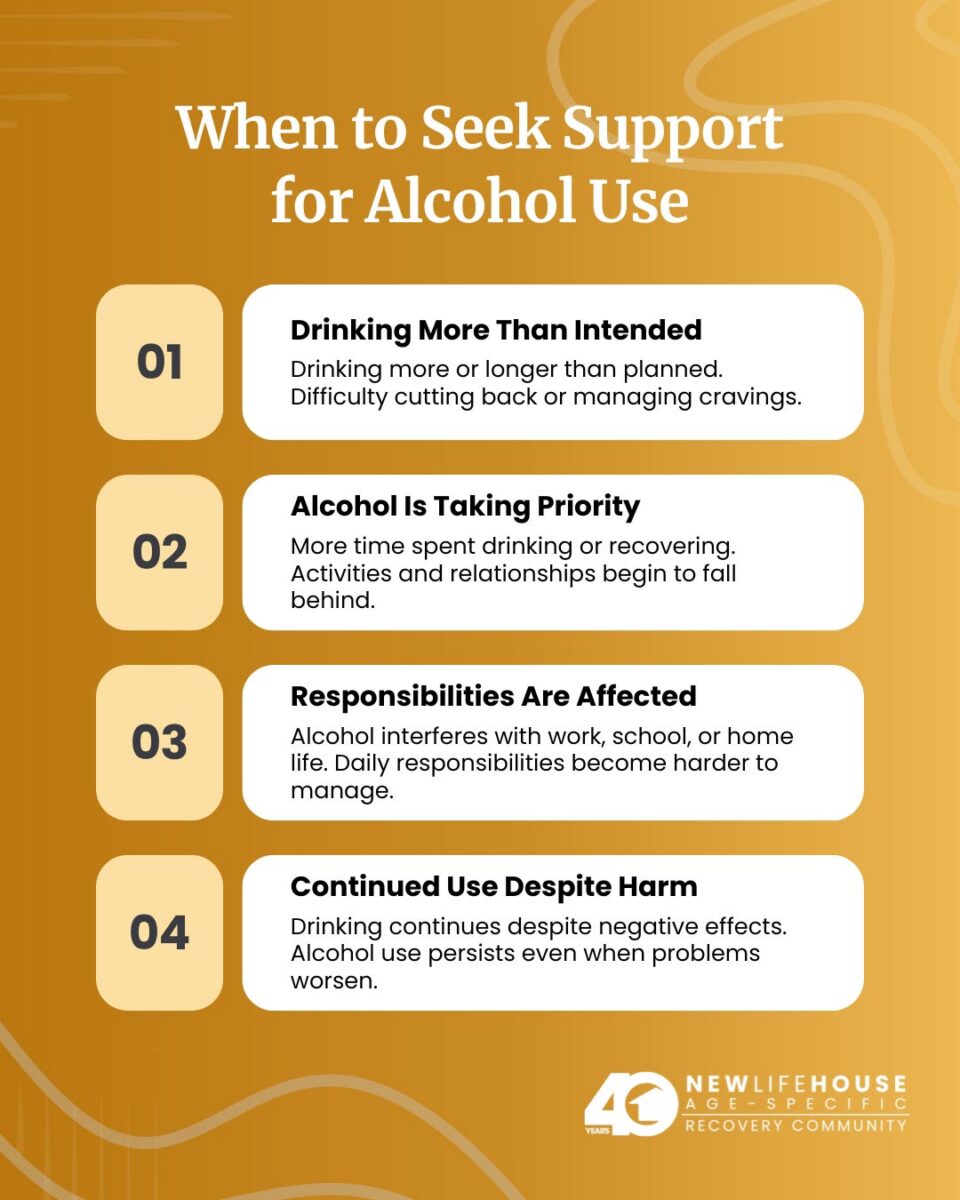
When To Seek Support for Alcohol Use
A single instance of blacking out is not necessarily a sign of an alcohol use disorder. However, there are other potential signs that may indicate you need professional help.9
- Drinking more alcohol over a longer period of time than intended.
- Alcohol dependence and unsuccessful attempts at cutting down or controlling your use.
- Spending lots of time getting, using, or recovering from alcohol.
- Experiencing cravings for alcohol.
- Inability to fulfill your obligations at work, home, or school because of drinking.
- Continuing to drink despite the negative consequences.
- Giving up important social or recreational activities because of alcohol.
- Using alcohol frequently in situations where it’s dangerous.
- Continuing to drink despite persistent, recurrent physical or psychological problems.
Besides blacking out, alcohol use disorder is associated with other serious risks, including heart disease, brain damage, liver disease, and some forms of cancer.10
How New Life House Can Help
If you think you may have a problem with alcohol, we can support you with a variety of structured, evidence-based programs that provide peer support and the help you need to build a newly sober life.
Getting to the roots of why you drink is an important step in your journey towards a healthier future. We can help you learn how to create new daily routines and build the structure you need to fully focus on your recovery and emotional growth.
Ready for a fresh start? For more information on our alcohol treatment program, contact New Life House today. Our specialists are standing by and ready to help you take that first step towards the healthy future you deserve.
References
- Voss JL, Bridge DJ, Cohen NJ, Walker JA. A Closer Look at the Hippocampus and Memory. Trends Cogn Sci. 2017 Aug;21(8):577-588. doi: 10.1016/j.tics.2017.05.008. Epub 2017 Jun 15. PMID: 28625353; PMCID: PMC5659202.
- Miller MB, Merrill JE, DiBello AM, Carey KB. Distinctions in Alcohol-Induced Memory Impairment: A Mixed Methods Study of En Bloc Versus Fragmentary Blackouts. Alcohol Clin Exp Res. 2018 Oct;42(10):2000-2010. doi: 10.1111/acer.13850. Epub 2018 Aug 28. PMID: 30152868; PMCID: PMC6167144.
- Molina PE, Nelson S. Binge Drinking’s Effects on the Body. Alcohol Res. 2018;39(1):99-109. doi: 10.35946/arcr.v39.1.13. PMID: 30557153; PMCID: PMC6104963. https://pmc.ncbi.nlm.nih.gov/articles/PMC6104963/
- Sugarman DE, Demartini KS, Carey KB. Are women at greater risk? An examination of alcohol-related consequences and gender. Am J Addict. 2009 May-Jun;18(3):194-7. doi: 10.1080/10550490902786991. PMID: 19340637; PMCID: PMC2951597. https://pmc.ncbi.nlm.nih.gov/articles/PMC2951597/
- White AM. What happened? Alcohol, memory blackouts, and the brain. Alcohol Res Health. 2003;27(2):186-96. PMID: 15303630; PMCID: PMC6668891. https://pmc.ncbi.nlm.nih.gov/articles/PMC6668891/
- Merrill JE, Boyle HK, López G, Riordan BC, Marie Ward R, Rosen RK, Carey KB. Recent alcohol-induced blackouts among heavy drinking college students: A qualitative examination of intentions, willingness, and social context. Exp Clin Psychopharmacol. 2022 Dec;30(6):831-840. doi: 10.1037/pha0000513. Epub 2021 Aug 12. PMID: 34383553; PMCID: PMC8837720. https://pmc.ncbi.nlm.nih.gov/articles/PMC8837720/
- Hirschtritt ME, Palzes VA, Kline-Simon AH, Kroenke K, Campbell CI, Sterling SA. Benzodiazepine and unhealthy alcohol use among adult outpatients. Am J Manag Care. 2019 Dec 1;25(12):e358-e365. PMID: 31860229; PMCID: PMC7217068. https://pmc.ncbi.nlm.nih.gov/articles/PMC7217068/
- Kim AJ, Merlo A, Mackus M, Bruce G, Johnson SJ, Alford C, Sherry SB, Stewart SH, Verster JC. Depression, Anxiety, and Stress among Hangover-Sensitive and Hangover-Resistant Drinkers. J Clin Med. 2023 Apr 7;12(8):2766. doi: 10.3390/jcm12082766. PMID: 37109103; PMCID: PMC10145060. https://pmc.ncbi.nlm.nih.gov/articles/PMC10145060/
- Office of the Surgeon General (US); National Institute on Alcohol Abuse and Alcoholism (US); Substance Abuse and Mental Health Services Administration (US). The Surgeon General’s Call to Action To Prevent and Reduce Underage Drinking. Rockville (MD): Office of the Surgeon General (US); 2007. Appendix B: DSM-IV-TR Diagnostic Criteria for Alcohol Abuse and Dependence. Available from: https://www.ncbi.nlm.nih.gov/books/NBK44358/
- Rehm J. The risks associated with alcohol use and alcoholism. Alcohol Res Health. 2011;34(2):135-43. PMID: 22330211; PMCID: PMC3307043. https://pmc.ncbi.nlm.nih.gov/articles/PMC3307043/